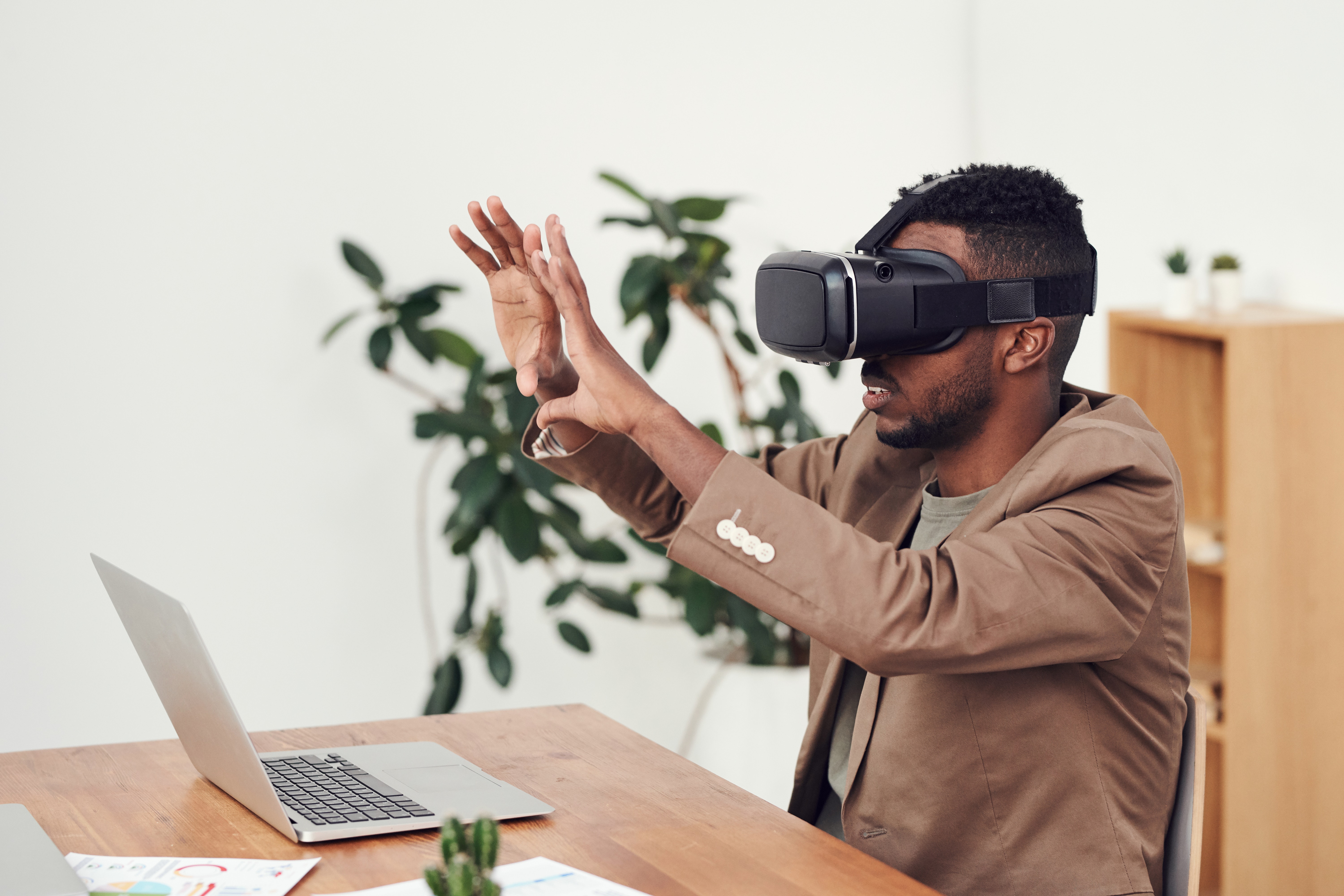
The ever-changing world we live in is driven by advancing technology, impacting every aspect of our lives. One significant technological advancement that has revolutionized how we interact with our surroundings is Augmented Reality (AR). While AR is often associated with fun selfie filters, its implications go far beyond that. Engineers are increasingly utilizing AR for their projects, despite challenges such as complexity and security risks. Cloudology is committed to keeping you up to date with the latest technologies. The world of augmented reality is vast, exploring its definition, current applications.
Understanding Augmented Reality
Augmented Reality (AR) is a digital technology that overlays virtual information onto the real world. Unlike virtual reality, which immerses users in a completely digital environment, AR seamlessly merges digital elements with reality. This is typically achieved through smartphones, tablets, or specialized glasses. By leveraging sensors, cameras, and algorithms, AR-enabled devices can recognize the physical environment and augment it with digital overlays.
Exploring the Different Types of AR
As technology progresses, various types of AR have emerged. Some notable categories include:
- Marker-Based AR: This widely-used AR technology relies on image recognition to animate 3D digital content or overlay it onto specific markers. We often encounter this type of AR in advertisements, product packaging, and gaming.
- Marker-less AR: Differing from marker-based AR, this technology detects the environment around the device and overlays immersive digital content on physical objects, surfaces, or locations. It finds applications in outdoor navigation systems, interior design, and community-driven apps like Yelp and Facebook.
- Projection-Based AR: This AR technology projects digital content onto real-world objects, creating an augmented reality experience. By using projectors and related hardware, images are projected onto surfaces that conform to the real environment. The retail industry utilizes this technology to display visual representations of products without physical samples.
- Superimposition-Based AR: This type of AR replaces a portion of a physical object with digital information. Initial environments are recognized, and augmented content replaces the original content. The medical industry heavily relies on this technology for treatment and disease tracking purposes.
- Outlining AR: Outlining AR breathes life into objects through augmented reality. By tracking an object's movements, virtual overlays are created, matching animations to the object's actions. This technology is frequently used to bring beloved cartoon characters to life for children.
Applications of Augmented Reality Today
The applications of augmented reality are vast and continue to expand. AR is utilized in various domains, offering digital experiences that challenge conventional limitations. Companies use AR to provide customers with visualizations of products, allowing them to see how items such as furniture will look in their homes before purchase. Educational apps utilize AR to enhance student understanding of science and history topics through interactive experiences. The gaming community fully immerses itself in a digital universe with the help of AR. Additionally, construction companies employ AR in Building Information Modules, enabling virtual exploration of home builds by construction workers.
As technology progresses and more industries embrace AR, the possibilities are boundless. Augmented reality is poised to transform the way we interact with our surroundings, offering enhanced digital experiences and opening new doors for innovation. AR offers new ways to learn, work and interact. It can help people with disabilities, such as hearing or visual impairments, to experience the world in a new way. It makes it easier for engineers, doctors, and business professionals to capture and assess the progress of their work. It reduces the time and resources needed for prototyping, testing, and risk mitigation. In addition, it can help save money. The use of AR in training for industries like aviation and engineering can lower the number of costly errors made during the learning process.Cloudology is committed to keeping you up to date with the latest technologies. The world of augmented reality is vast, exploring its definition, current applications.